
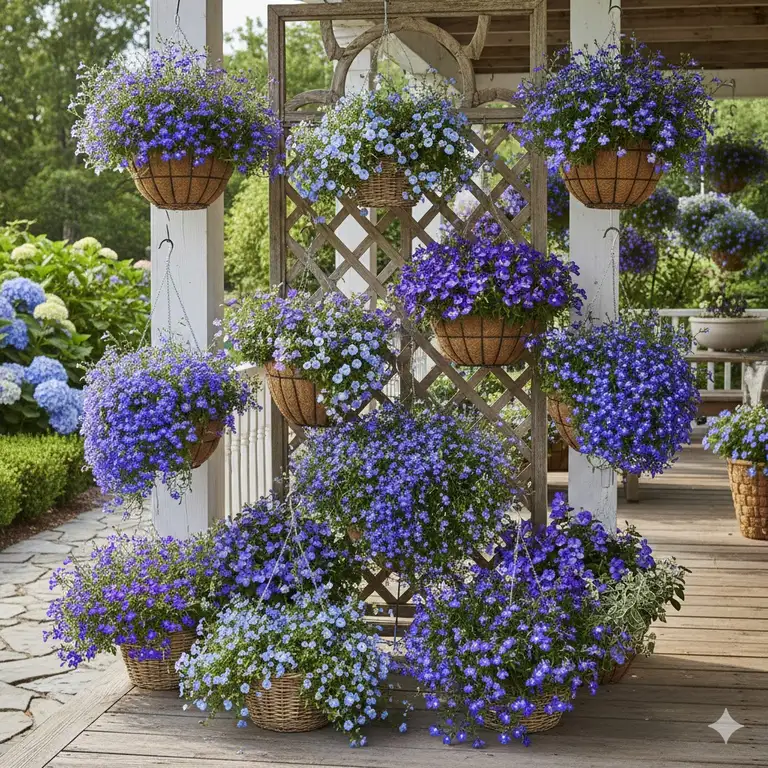
I have always believed that there is something almost magical about the color blue in a garden. It is rare, it is cooling, and frankly, it makes your neighbors a little bit jealous. When you start looking for blue hanging basket plants, you realize you aren’t just buying flowers; you are buying a piece of the sky to hang on your front porch.
✨Was this helpful? Spread the word! 🚀
[addtoany]
I remember the first time I tried to put together a “true blue” display. I ended up with a lot of purples and lavenders because, as any gardener will tell you, nature loves to tease us with “blue-ish” tones. But finding that perfect, electric blue is a game-changer. Whether you live in the humid South or the breezy Pacific Northwest, adding these cooling tones can transform a frantic, hot summer day into a serene outdoor retreat.
Before we dive into the nitty-gritty details of soil pH and fertilization schedules, let’s take a high-level look at why you might choose blue hanging basket plants over the more common red or yellow varieties.
Quick Comparison: Blue vs. Traditional Basket Colors
| Feature | Blue Hanging Basket Plants | Traditional Red/Yellow Plants |
| Visual Impact | Receding color (makes spaces feel larger) | Advancing color (pops and feels closer) |
| Temperature Feel | Cooling and calming | High energy and “hot” |
| Pollinator Draw | High attraction for bees and butterflies | High attraction for hummingbirds |
| Rarity | Harder to find “true” shades | Extremely common and easy to source |
| Best Backdrop | White, grey, or pale yellow houses | Dark wood, brick, or green foliage |
Top 7 blue hanging basket plants: Expert Analysis
Searching for the perfect plant on Amazon or at a local nursery can be overwhelming. I’ve done the legwork for you, looking into the most reliable, high-performing species available for the 2026 growing season. These aren’t just random choices; they are the heavy hitters of the horticultural world.
1. Proven Winners Evolvulus ‘Blue My Mind’
If you want a plant that can survive a Texas summer without flinching, this is it. The Proven Winners Evolvulus ‘Blue My Mind’ is often called “dwarf morning glory,” but it’s much more behaved. It features true-blue flowers that stay open all day, unlike traditional morning glories.
-
Technical Specifications:
-
Scientific Name: Evolvulus hybrid
-
Light Requirement: Full Sun (6+ hours)
-
Hardiness Zones: 9-11 (Perennial), 3-8 (Annual)
-
Mature Height: 6-12 inches
-
Spread: 12-24 inches
-
Water Needs: Low to Moderate (Drought tolerant once established)
-
-
Customer Review Analysis: Users consistently praise its ability to withstand extreme heat. One reviewer noted, “Even in 100-degree weather, these blue hanging basket plants didn’t wilt.” Some users mentioned that it takes a few weeks to really “take off,” but once it does, the coverage is dense.
-
Professional Applications: Ideal for coastal gardens due to salt tolerance and high-heat urban environments where concrete radiates heat.
-
Pros:
-
No deadheading required (self-cleaning).
-
Intense, sky-blue color.
-
Thrives in poor soil conditions.
-
-
Cons:
-
Will not bloom well in shade.
-
Sensitive to overwatering.
-
2. Scaevola aemula ‘Whirlwind Blue’
Commonly known as the Fan Flower, the Scaevola aemula ‘Whirlwind Blue’ is a powerhouse for blue hanging basket plants. Its unique semi-circular flowers look like tiny hand fans scattered across a lush green carpet.
-
Technical Specifications:
-
Scientific Name: Scaevola aemula
-
Light Requirement: Full Sun to Partial Sun
-
Hardiness Zones: 10-11
-
Growth Habit: Trailing/Spreading
-
Bloom Time: Planting to Frost
-
Maintenance: Low
-
-
Customer Review Analysis: Gardeners love the “weirdness” of the flower shape. A common piece of feedback is that it stays green and vibrant even when other plants start to look “leggy” in late August.
-
Professional Applications: Used frequently in commercial “streetscape” baskets because of its durability.
-
Pros:
-
Extremely drought-resistant.
-
Pest resistant (deer rarely touch it).
-
Unique floral architecture.
-
-
Cons:
-
Can be pricey for high-quality cultivars.
-
Needs regular feeding to maintain heavy blooms.
-
3. Torenia ‘Summer Wave Large Blue’
For those with shady porches, the Torenia ‘Summer Wave Large Blue’ (also known as the Wishbone Flower) is your best friend. It offers a deep, velvety cobalt blue that thrives where other blue plants for hanging basket would wither.
-
Technical Specifications:
-
Scientific Name: Torenia hybrid
-
Light Requirement: Partial Shade to Full Shade
-
Hardiness Zones: 10-11
-
Trailing Length: Up to 30 inches
-
Special Feature: Snap-dragon like flowers with a “wishbone” stamen.
-
-
Customer Review Analysis: Customers highlight its “lushness.” One user wrote, “It looks like a blue waterfall coming off my north-facing balcony.” Note: some reported it can be prone to powdery mildew if the air circulation is poor.
-
Professional Applications: Perfect for wooded properties or apartments with limited direct sunlight.
-
Pros:
-
Brilliant color in dark corners.
-
Attracts hummingbirds.
-
High heat and humidity tolerance for a shade plant.
-
-
Cons:
-
Requires consistent moisture; does not like to dry out.
-
Susceptible to fungus in stagnant air.
-
4. Lobelia erinus ‘Lucia Dark Blue’
When people think of blue flower hanging baskets, they usually picture Lobelia. The Lobelia erinus ‘Lucia Dark Blue’ is an improved variety that doesn’t “burn out” as quickly as older types when the summer heat hits.
-
Technical Specifications:
-
Scientific Name: Lobelia erinus
-
Light Requirement: Sun to Part Shade
-
Flower Color: Deep Electric Blue
-
Growth Rate: Fast
-
Planting Density: 3 plants per 12-inch basket
-
-
Customer Review Analysis: Most reviews focus on the sheer volume of flowers. It’s often described as a “solid ball of blue.” However, some growers in the Deep South find it still struggles in July without afternoon shade.
-
Professional Applications: Used as a “filler” or “spiller” in mixed container designs for its intense color density.
-
Pros:
-
Unmatched color saturation.
-
Very fast-growing.
-
Great for mixed baskets.
-
-
Cons:
-
Can go dormant in extreme heat.
-
Needs heavy fertilization.
-
5. Petunia ‘NightSky’
The Petunia ‘NightSky’ revolutionized the world of blue hanging plants. Each flower is deep purple-blue with white speckles that look like a literal galaxy. No two flowers are the same.
-
Technical Specifications:
-
Scientific Name: Petunia hybrid
-
Light Requirement: Full Sun
-
Unique Property: Pattern changes based on temperature ($temp \propto pattern$).
-
Maintenance: Requires deadheading and pinching.
-
-
Customer Review Analysis: People buy this for the “wow” factor. Reviews are 90% aesthetic-focused. A few users mentioned the pattern can turn solid white or solid blue if the temperature fluctuates too wildly (high day/cool night).
-
Professional Applications: High-end residential landscaping where a conversation piece is needed.
-
Pros:
-
Most unique visual on the market.
-
Vigorous growth.
-
Good fragrance.
-
-
Cons:
-
Needs frequent “haircuts” to stay tidy.
-
Heavy feeder.
-
6. Campanula ‘Blue Waterfall’
The Campanula ‘Blue Waterfall’ (Bellflower) is a perennial that works beautifully in a hanging setting. It produces a massive amount of star-shaped, lavender-blue flowers.
-
Technical Specifications:
-
Scientific Name: Campanula poscharskyana
-
Light Requirement: Sun to Partial Shade
-
Hardiness: Zones 4-9 (Very hardy)
-
Bloom Period: Early to mid-summer
-
-
Customer Review Analysis: Highly rated for its “perennial nature.” Users love that they don’t have to buy new ones every year if they over-winter them correctly. One warning from a user: “It can spread into your garden beds if the basket is low to the ground!”
-
Professional Applications: Rock gardens or hanging over stone walls.
-
Pros:
-
Extremely cold hardy.
-
Long-lived perennial.
-
Delicate, romantic aesthetic.
-
-
Cons:
-
Shorter bloom window than annuals.
-
Can be aggressive in the garden.
-
7. Bacopa ‘Blueberry Blizzard’
While often found in white, the Bacopa ‘Blueberry Blizzard’ offers a soft, pale blue that acts as a wonderful neutral in blue flowering hanging basket plants arrangements.
-
Technical Specifications:
-
Scientific Name: Sutera cordata
-
Light Requirement: Full Sun to Part Shade
-
Trailing Length: 12-18 inches
-
Flower Size: Small, five-petaled
-
-
Customer Review Analysis: Known as the “reliable friend” of the garden. Reviews often mention that it “never stops blooming.” The main complaint is that it “faints” instantly if you forget to water it for even one day.
-
Professional Applications: Perfect edge-filler for large hanging displays.
-
Pros:
-
Continuous bloom cycle.
-
Very clean, tidy look.
-
Pairs well with almost any other plant.
-
-
Cons:
-
“Death by drying”—it does not recover well from wilting.
-
Very thirsty.
-
✨ Don’t Miss These Exclusive Deals!
🔍 Take your garden to the next level with these carefully selected products. Click on any highlighted item to check current pricing and availability. These plants and tools will help you create a vibrant, blue oasis your neighbors will envy! 🌿✨
💬 Just one click – help others make better buying decisions too!😊
[addtoany]
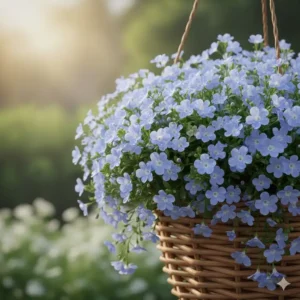
Technical Specifications Matrix (Spec Matrix)
| Plant Name | Light | Water Needs | Growth Habit | Best For |
| Blue My Mind | Full Sun | Low | Mounded/Spreading | Heat/Drought |
| Whirlwind Blue | Full Sun | Moderate | Trailing | Durability |
| Summer Wave | Shade | High | Long Trailer | Porches |
| Lucia Dark Blue | Sun/Part Sun | High | Dense Ball | Color Pop |
| NightSky | Full Sun | Moderate | Spreading | Unique Look |
| Blue Waterfall | Sun/Part Sun | Moderate | Trailing | Cold Climates |
| Blueberry Blizzard | Sun/Part Sun | High | Delicate Trailer | Fillers |
Budget vs. Premium Comparison
| Category | Typical Option | Expected Longevity | Maintenance Level |
| Budget (Seeds) | Lobelia ‘Crystal Palace’ | One season | High (Start early) |
| Mid-Range | Generic Bacopa/Petunia | One season | Moderate |
| Premium (Branded) | Proven Winners Evolvulus | One season (Annual) | Low (Self-cleaning) |
| Investment (Perennial) | Campanula | Multi-year | Moderate (Pruning) |
The Science and Psychology of Blue Hanging Basket Plants
Why are we so obsessed with blue? In the world of botany, blue is a bit of a freak of nature. Most “blue” flowers are actually variations of purple or violet. The true blue pigment, delphinidin, is a complex chemical structure. I find it fascinating that humans have spent centuries breeding plants just to get that perfect shade of sapphire or cerulean.
How Soil pH Affects Your Blue Hues
You might have heard that Hydrangeas change color based on soil acidity. While most of our blue hanging basket plants list aren’t quite as dramatic, soil health still matters. A neutral to slightly acidic $pH$ (around 6.0 to 7.0) generally allows for the best nutrient uptake. If your soil is too alkaline, your plants might struggle to absorb iron, leading to yellowing leaves (chlorosis), which really ruins the “blue” aesthetic.
The chemical formula for plant health often involves a balance of Nitrogen ($N$), Phosphorus ($P$), and Potassium ($K$). For blooming plants, you want a fertilizer where the $P$ (the middle number) is slightly higher to encourage those blue blossoms.
Psychological Impact of Blue in Small Spaces
If you have a small balcony in a city like New York or Chicago, using blue basket plants for hanging can actually make your space feel larger. It’s a trick of the eye. Warm colors like red and orange “advance” toward you, making a space feel cozy but smaller. Cool colors like blue “recede,” creating a sense of distance and depth. It’s like painting a room light blue to open it up!
Benefits Quantification: Blue vs. Red/Yellow Gardens
| Benefit | Blue Palette Score | Red/Yellow Palette Score |
| Space Expansion | ⭐⭐⭐⭐⭐ | ⭐⭐ |
| Calmness Factor | ⭐⭐⭐⭐⭐ | ⭐ |
| Heat Perception | ⭐⭐⭐ (Feels cooler) | ⭐ (Feels hotter) |
| Wildlife (Bees) | ⭐⭐⭐⭐⭐ | ⭐⭐⭐ |
| Wildlife (Hummers) | ⭐⭐ | ⭐⭐⭐⭐⭐ |
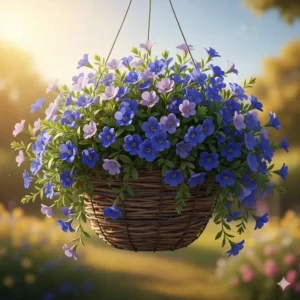
Comprehensive Care Guide for Blue Hanging Plants
I’ve killed my fair share of plants, believe me. Through trial and error (and a lot of dead Lobelia), I’ve learned that hanging baskets are a different beast than garden beds. They are exposed to the wind on all sides and have a limited amount of soil to hold moisture.
1. The Watering “Finger Test”
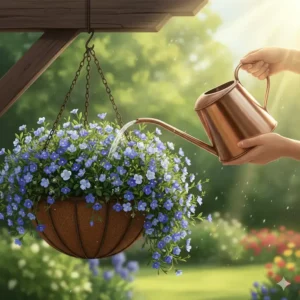
I cannot stress this enough: do not water on a schedule. Water on demand. Stick your finger an inch into the soil. If it’s dry, water it until it runs out the bottom. In the heat of July, blue hanging plants might need water twice a day. If you use a plastic basket, it will hold moisture longer than a coco-fiber liner.
“A hanging basket is like a person in a sauna; it needs way more hydration than you think just to stay standing.”
2. Feeding for Performance
Hanging baskets are “heavy feeders.” Every time you water and the excess drains out, it takes nutrients with it. I recommend using a slow-release granular fertilizer at planting, followed by a liquid “bloom booster” every two weeks. Look for a N-P-K ratio like 15-30-15.
3. Strategic Placement
-
The Windy Corner: Avoid hanging delicate plants like Bacopa in high-wind areas. They will get “wind burn” and look tattered.
-
Reflective Heat: If your basket is against a white vinyl siding wall, the reflected heat can be 10-15 degrees hotter than the ambient air. Choose blue hanging baskets plants that are heat-tough, like Evolvulus.
Key Features/Benefits Comparison
| Plant | Heat Tolerance | Wind Tolerance | Shade Tolerance | Fragrance |
| Evolvulus | Excellent | Good | Poor | None |
| Scaevola | Excellent | Excellent | Moderate | None |
| Torenia | Moderate | Moderate | Excellent | Subtle |
| Lobelia | Poor | Moderate | Good | None |
| Petunia | Moderate | Poor | Poor | Strong |
| Campanula | Good | Moderate | Good | None |
| Bacopa | Moderate | Poor | Moderate | None |
Design Inspiration: Mixing and Matching
You don’t have to go “monochromatic.” In fact, some of the most stunning hanging plants with blue flowers look best when paired with contrasting colors.
The “Complementary” Look
Pair your blue flowers with orange. Since blue and orange are opposites on the color wheel, they make each other “vibrate.” A blue Scaevola mixed with an orange Lantana is a show-stopper.
The “Moonlight” Garden
Mix your blue flowers with white and silver. Imagine blue flowering hanging basket plants like Lobelia paired with white Bacopa and silver Dichondra (‘Silver Falls’). At dusk, the white and silver reflect the moonlight, while the blue provides a deep, mysterious shadow.
The “Ombre” Effect
Use different shades of blue and purple. Start with a deep purple Petunia in the center, surround it with mid-blue Lobelia, and edge it with pale blue Bacopa. It creates a sophisticated, professional-grade look.
Requirements Analysis for Different Users
| User Type | Recommended Plant | Why? |
| The “Forgetful” Gardener | Evolvulus | Can handle missed waterings. |
| The Apartment Dweller | Torenia | Thrives in low-light balconies. |
| The Perfectionist | NightSky Petunia | Rewarding but requires pruning. |
| The Eco-Conscious | Scaevola | Native varieties support local bees. |
| The Frugal Gardener | Campanula | It comes back every year! |
Common Problems and Solutions (FAQs)
Before we wrap up, let’s address the things that usually go wrong. Gardening is 50% love and 50% problem-solving.
Why are my blue flowers turning green/brown?
This is usually a sign of “seed pod” formation. When a plant thinks its job is done, it stops blooming and starts making seeds. To prevent this, you need to “deadhead” or pinch back the spent blooms. Some modern blue plants for hanging basket are “self-cleaning,” meaning they drop their dead flowers automatically.
Pests and Critters
-
Aphids: These tiny bugs love tender new growth. A quick spray of neem oil or soapy water usually does the trick.
-
Spider Mites: If you see tiny webs, your plant is too dry. Increase humidity and spray with water.
-
Deer: Most blue flowers (especially Scaevola) are relatively deer-resistant, but a hungry deer will eat almost anything if they are desperate.
Performance Metrics: Bloom Time and Density
| Plant | Bloom Duration | Flower Density | “Leggy” Factor |
| Blue My Mind | May-Oct | High | Low |
| Whirlwind Blue | May-Sept | Medium | Low |
| Summer Wave | June-Oct | High | Medium |
| Lucia Dark Blue | April-June | Very High | High (Needs trim) |
| NightSky | May-Aug | Medium | High (Needs trim) |
| Blue Waterfall | June-July | High | Low |
| Blueberry Blizzard | May-Sept | Medium | Low |
✨ Shop the 2026 Blue Collection Now!
🔍 Ready to make your garden goals a reality? Click any of our analyzed products to see current availability and start your journey toward a stunning blue porch display today. Happy gardening! 🌿🛒
Conclusion: Bringing the Sky Down to Earth
Choosing the right blue hanging basket plants is about more than just picking a color you like. It’s about understanding your environment—your sun levels, your wind, and your own willingness to carry a watering can. Whether you opt for the heat-defying Evolvulus or the shade-loving Torenia, adding blue to your vertical garden space provides a sophisticated, calming influence that few other colors can match.
I’ve found that the best gardens aren’t the ones with the most expensive plants, but the ones where the gardener really understands what the plants need. Start small, pick one or two of the “Top 7” we discussed, and see how they transform your space. There’s nothing quite like sitting on your porch with a cold drink, looking up at a vibrant blue basket swaying in the breeze.
FAQs
❓ Which blue hanging basket plants are best for full sun in hot climates?
❓ Do I need to deadhead blue flowering hanging basket plants to keep them blooming?
❓ Can I grow blue hanging basket plants indoors near a window?
❓ How often should I fertilize my blue hanging plants for the best color?
❓ Why are my blue hanging plants turning yellow?
Recommended for You
- 7 Best 4 inch hanging planter Styles to Transform Your Home in 2026
- Hanging Basket Seeds for 2026: 10 Best Choices for Stunning Trails
- Best Flower Plants for Hanging Baskets: 7 Long-Blooming Favorites Gardeners Love
Disclaimer: This article contains affiliate links. If you purchase products through these links, we may earn a small commission at no additional cost to you.
✨ Found this helpful? Share it with your friends! 💬🤗
[addtoany]
