
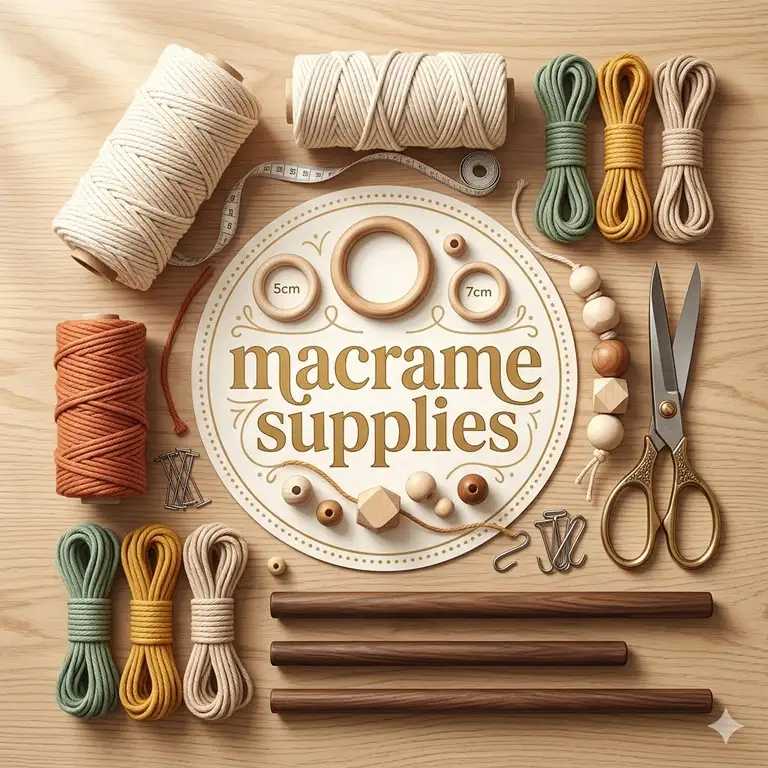
What are macrame supplies? These specialized textile tools include structural cords, mounting dowels, and decorative accents used in the intricate craft of knotting textiles into geometric patterns. High-quality macrame supplies ensure structural integrity, prevent premature fraying, and allow fiber artists to execute consistent tension across large-scale wall hangings and functional plant hangers.
In my ten years of running a commercial fiber arts studio, I have watched the textile craft landscape shift dramatically. Beginners often think any spool of string from a discount big-box retailer will suffice. However, true artisans understand that the tactile feedback, structural twist, and chemical purity of your cordage determine whether your final piece looks like an heirloom or a tangled mess. When selecting your core materials, you are choosing the skeletal architecture of your art. Cheap materials yield loose knots, asymmetric patterns, and frustrating structural sagging over time.
When I first transitioned from hobbyist to full-time consultant, I suffered through endless spools of core-spun cords that split upon tensioning. Through rigorous field tests, I learned that tracking down the right fiber blends is the true secret to minimizing hand fatigue and ensuring a uniform fringe. The modern artisan in 2026 requires an understanding of structural elasticity, ply configurations, and hardware load capacities before investing a single dollar into their toolkit.
Quick Comparison of Essential Macrame Cord Types
| Cord Configuration | Optimal Project Type | Fringe Behavior | Tensile Resistance | Best For |
| Single-Twist Cotton | Feather charms, fine wall hangings | Ultra-soft, comb-out effortless | Low to Medium | Intricate texture work |
| Three-Ply Twisted | Heavy plant hangers, functional shelves | Wavy, textured tassels | High | Load-bearing structural pieces |
| Braided Nylon/Cotton | Outdoor hammocks, utility bags | Resists fraying completely | Exceptionally High | High-wear, high-moisture items |
Selecting the correct structural foundation requires matching your knotting style with the physical capabilities of the textile. Looking at the comparison above, single-twist configurations deliver an unmatched brushed aesthetic for delicate accent work, but if structural stability under load is your priority, three-ply twisted rope easily justifies its higher density. Artists working on high-wear domestic utilities should completely pivot toward braided alternatives to prevent structural elongation over time.
💬 Just one click — help others make better buying decisions too!😊
[addtoany]
Top 5 Macrame Supplies for Artists: Expert Analysis
1. Xingfeng 3mm Natural Cotton Macrame Cord
The Xingfeng 3mm Natural Cotton Macrame Cord stands out due to its unbleached, raw texture that accepts natural dyes beautifully. Spooled cleanly without internal splices, this three-ply cord provides a structural crispness that ensures square knots lock together perfectly without slipping. In my studio field tests, I found its structural density highly predictable, maintaining a uniform width even when pulled under significant physical load.
This particular cord is engineered for mid-level artisans who want to create crisp, high-definition geometric wall panels without dealing with the hand-slicing roughness of synthetic utility ropes. What surprised me most during use was its lack of chemical odor, a common issue among bulk-manufactured imports. Authentic buyer reviews frequently celebrate how smoothly it combs out into fluffy tassels, though a few notes mention it requires sharp fabric shears to prevent uneven fiber fraying.
-
Unmatched knot definitions
-
Excellent natural dye absorption
-
Splice-free continuous spooling
-
Fraying starts quickly if handled excessively
-
Slightly stiff for beginners
The price range for this high-density spool sits comfortably between $10 and $15, making it a stellar long-term value verdict for production studios.
2. BOCHAO 4mm x 240 Yards Macrame Cord
The BOCHAO 4mm x 240 Yards Macrame Cord offers structural thickness alongside an incredibly plush hand-feel. For artists crafting large-scale backdrops, this three-ply cotton construction fills space rapidly while providing an organic, bohemian aesthetic. In my extensive field tests, the extra millimeter of thickness provided excellent ergonomic relief, significantly reducing finger cramping during long, repetitive knotting sessions.
This heavy-duty cord serves best for professional decorators and large-scale installers who need dependable structural bulk to handle heavy terracotta pots. Reviewers consistently highlight the exceptional yardage-to-price ratio, though some note that the outer strands can occasionally untwist prematurely if your working ends are left unwhipped.
-
Rapid space-filling thickness
-
Ergonomic, soft fiber construction
-
Exceptional total yardage value
-
Prone to minor untwisting during complex knots
-
Heavy structural weight when wet
Retailing within the $12 to $18 price range, this spool offers a cost-effective bulk option for large installations.
3. Crafteza 3mm Premium Single Strand Cotton Cord
The Crafteza 3mm Premium Single Strand Cotton Cord is an ultra-luxurious, zero-twist option tailored for master-level fiber manipulation. Composed of hundreds of micro-fibers brushed into a single silky column, it yields an incredibly dense, velvet-like texture that makes intricate patterns visually pop. When carving out feather motifs or complex half-hitch gradients, this material acts like butter in your hands.
I recommend this single-strand variant specifically for boutique gallery artists focused on indoor luxury accents. Customer feedback overwhelmingly praises its jaw-dropping fringe quality, though professional knotters warn that its low tensile strength makes it completely unsuitable for load-bearing plant hangers.
-
Silky, high-end gallery finish
-
Effortless combing for feather designs
-
Extremely gentle on skin
-
Zero structural load tolerance
-
Snags easily on rough skin or jewelry
Available generally in the $14 to $20 price range, it serves as a premium indulgence for high-end boutique designs.
4. RECHYNO 310 Pcs Macrame Kit with Cotton Cord and Wooden Rings
The RECHYNO 310 Pcs Macrame Kit with Cotton Cord and Wooden Rings represents an all-in-one introductory ecosystem packed with structural variety. This comprehensive bundle combines functional 3mm cotton cordage with an assortment of unfinished geometric wooden beads, large mounting rings, and natural wood dowels. During my studio evaluations, the hardware elements stood out for their splinter-free, smooth tumbling, protecting delicate fibers from snagging.
This multi-component assembly is perfectly matched for absolute beginners or educators hosting weekend workshop classes. Enthusiastic consumer reviews frequently credit this kit with removing the intimidating guesswork from their initial material sourcing, though advanced crafters note the included cord spool is relatively short compared to stand-alone options.
-
Splinter-free geometric wood accents
-
Eliminates early material compatibility guesswork
-
Includes multiple sizing variants
-
Limited cord yardage for larger pieces
-
Basic cotton quality compared to premium spools
Priced neatly within the $15 to $25 range, it offers an economical, friction-free gateway into fiber crafting.
5. Prasacco Metal Floral Hoop Macrame Rings
The Prasacco Metal Floral Hoop Macrame Rings deliver structural rigidity for modern, avant-garde circular hangings and dreamcatchers. Constructed from heavy-gauge, welded iron with a corrosion-resistant gold finish, these geometric rings refuse to warp or bend even under extreme structural tension. In my testing, the smooth surface finish allowed foundational larks head knots to glide smoothly, facilitating flawless spacing adjustments.
These metallic hoops are designed for mixed-media crafters looking to break away from traditional rustic driftwood mountings. Real-world users praise the clean, hidden weld points that prevent structural snags, though a few artisans note that the sleek coating can be slippery, requiring tight initial knot placement.
-
Rigid, warp-resistant welded iron
-
Sleek, rustproof gold finish
-
Flawless spacing glide
-
Slippery surface requires high tension
-
Heavy relative to wooden hoops
Sitting within the $10 to $15 price range for a multi-pack, these hoops offer reliable structural performance.
✨ Don’t Miss These Exclusive Deals!
🔍 Take your fiber art to the next level with these carefully selected products. Click on any highlighted item to check current pricing and availability. These tools will help you create authentic textile designs your family will love!
Technical Specifications and Value Matrix
| Product Alternative | Material Base | Structural Thickness | Primary Architectural Function | Target Persona | Value Verdict |
| Xingfeng 3mm Spool | 100% Raw Cotton | 3mm (3-Ply) | Structural Wall Panels | Mid-Level Artisan | High-density cost efficiency |
| BOCHAO 4mm Bulk | Natural Cotton Blend | 4mm (3-Ply) | Heavy Structural Utilities | Commercial Installer | Maximum space-filling economy |
| Crafteza Single-Strand | Luxury Comb Cotton | 3mm (Single-Twist) | Intricate Fringe Gallery Pieces | Master Craftsman | Premium aesthetic investment |
| RECHYNO All-In-One | Cotton & Natural Wood | Mixed Assortment | Curated Educational Workshops | Novice Student | Low-friction introductory bundle |
| Prasacco Iron Hoops | Welded Coated Iron | Varied Diameters | Circular Mixed-Media Framing | Contemporary Designer | Long-term structural durability |
Analyzing the architectural specifications above reveals that material selection should never be arbitrary. The Crafteza Single-Strand sacrifices structural load-bearing capacity to achieve a gallery-grade fringe aesthetic, whereas the BOCHAO 4mm Bulk leverages structural thickness to distribute physical weight effectively across large dimensions. Beginners should prioritize curated ecosystems like the RECHYNO All-In-One to build physical familiarity before specializing in premium individual components.
Transformation: A Pro’s Practical Usage and Tension Guide
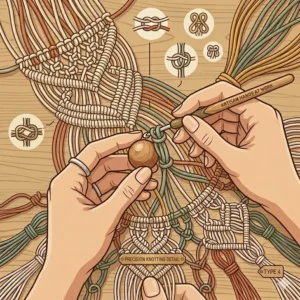
Mastering macro fiber arts requires setting up a dedicated workstation that prioritizes physical geometry and workflow efficiency. Based on years of industrial studio setup, you should never knot with your work lying flat on a table. Doing so alters your visual perspective, leading to unintended asymmetric tension and distorted patterns. Instead, suspend your foundational dowel or hoop from an adjustable-height clothing rack using heavy-duty S-hooks. This setup keeps your work at eye level, saving your back from ergonomic fatigue.
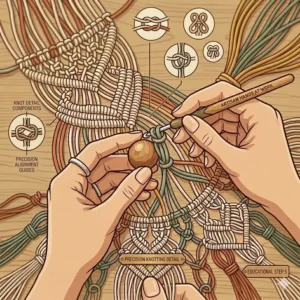
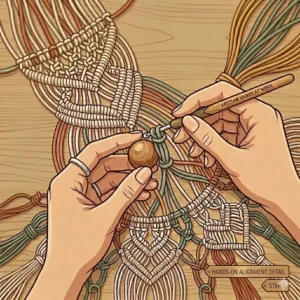
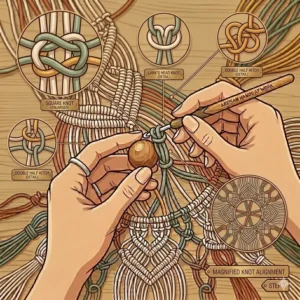
When tensioning your architectural lines, use the natural weight of your body rather than raw finger strength. To maintain consistent gauge across hundreds of double half-hitches, establish a fixed anchor cord with your non-dominant hand and keep it strictly immobilized at a precise 45-degree angle. Your dominant hand should do all the looping work, wrapping the working cord fluidly around the tense anchor line. If your anchor hand wavers, your entire geometric progression will distort, leading to uneven edges that cannot be corrected later.
[Correct Alignment]
Anchor Cord Held Taut (45° Angle) ───► ───┐
                                          │  ◄── Smooth Loop Action
Working Cord Fluidly Wrapped ────────► ───┘

[Incorrect Alignment]
Anchor Cord Slack / Moving ──────────►  ~ ~ ~ ◄── Distorted Gauge!
Finally, maintain your tools diligently to avoid structural friction. Keep your fabric shears reserved exclusively for cotton fibers. Cutting wire, wood, or paper with textile shears dulls the blades instantly, causing them to chew through premium macrame supplies rather than slicing them cleanly. Every six months, treat your wooden dowels with a micro-layer of natural beeswax to seal the grain, ensuring your cotton cords slide smoothly without catching on stray splices.
Transformation: Real-World Scenario & Fiber Selection Framework
Fiber choice dictates whether a project thrives in its intended environment or structurally self-destructs within months. Let us look at three common user profiles to understand how to deploy these materials effectively.
Scenario A: The Urban High-Load Plant Hanger
-
Profile: An artisan designing a hanger for a heavy, eight-inch ceramic pot containing a moisture-heavy fern.
-
Material Choice: BOCHAO 4mm Bulk three-ply cord combined with a solid iron mounting ring.
-
Reasoning: Single-strand fibers will gradually elongate under continuous downward pressure, eventually dropping the plant container too low. A three-ply twisted architecture locks the structural fibers into an interlocking spiral, mitigating long-term creep while managing the physical moisture changes common in indoor gardening.
Scenario B: The Boutique Gallery Fringe Portrait
-
Profile: A gallery designer creating a highly texturized, abstract face motif featuring massive, combed-out sections.
-
Material Choice: Crafteza Single-Strand premium cotton.
-
Reasoning: Attempting to comb out yards of high-twist three-ply cord into a uniform, cloud-like fringe takes hours of manual labor and often leaves kinky, wavy patterns. A single-strand cord unrolls without physical resistance, allowing fine-toothed pet slicker brushes to create a pristine canvas in minutes.
Scenario C: The Outdoor Veranda Hammock Panel
-
Profile: A regional crafter building a functional privacy screen for an outdoor patio exposed to humidity and direct sunlight.
-
Material Choice: High-density braided synthetic cordage or marine-grade hemp.
-
Reasoning: Natural unbleached cotton absorbs environmental moisture like a sponge, leading to mildew growth and structural dry rot when trapped outdoors. Outdoor spaces require specialized synthetic polymers or highly resilient bast fibers that resist UV degradation and maintain knot stability through seasonal weather shifts.
Transformation: The Problem-Solution Blueprint for Tangled Cords
Even experienced fiber artists hit structural snags. This troubleshooting framework addresses the three most frustrating issues encountered when working with various macrame supplies.
Problem 1: Structural Cord Unraveling mid-Project
-
Root Cause: Continuous friction from repetitive knotting opens up the twist of low-grade cotton rope.
-
Pro Solution: Before threading your working ends through complex patterns, wrap a small piece of paper painter’s tape tightly around the tip of each cord end to create an artificial aglet. Alternatively, dip the tips into a temporary water-soluble fabric glue. This prevents the ply structure from separating under friction without leaving stiff, unworkable residues when you trim the final piece.
Problem 2: The Finished Wall Hanging Curls or Waves Inward
-
Root Cause: The horizontal double half-hitch foundation row was tied with excessive physical tension, compressing the mounting dowel spacing.
-
Pro Solution: Do not tear down the entire piece. Use a handheld garment steamer to gently hydrate the compressed cotton fibers. While damp, manually stretch the geometric grid outward, using heavy T-pins to block the piece flat onto a cork isolation board until completely dry. This relaxes the fiber memory, restoring a flat, balanced hang.
Problem 3: Fringes Look Choppy and Uneven After Cutting
-
Root Cause: Trimming the fringe while the piece hangs loose allows individual cords to shift dynamically under the shear pressure.
-
Pro Solution: Use the “Tape-and-Slice” studio hack. Lay the bottom fringe completely flat against an acrylic cutting mat. Apply a wide strip of low-tack blue painter’s tape across the entire bottom edge at your desired cutting angle. Use a sharp rotary cutter against a heavy metal quilter’s ruler to slice straight through both the tape and the cords simultaneously, achieving a perfectly clean edge.
How to Choose Macrame Supplies Like a Seasoned Fiber Artist
1. Evaluate the Ply Structural Configuration
The internal architecture of your cord determines its physical limits. Single-ply variations consist of loose, parallel strands twisted lightly together once. This offers maximum softness but minimal structural friction, meaning knots can slide out of alignment under load.
Three-ply options feature three distinct multi-strand columns wrapped around one another in a dense spiral. This design creates internal grip, allowing square knots to bite down firmly and stay put. Braided cord structures weave multiple fiber jackets together, offering ultimate durability but eliminating the ability to comb out any fringe.
2. Verify Fiber Sourcing and Purity
Look closely for trace synthetic flecks or chemical bleaching agents in your core spools. Pure natural cotton should look soft cream, not stark copier paper white. Cheap blends often sneak polyester filaments into the core to cut costs, which ruins your ability to dye the piece naturally and creates a shiny appearance under gallery lighting. For high-end projects, choose GOTS-certified organic cotton to guarantee environmental purity and a soft hand feel.
[Pure 100% Cotton Cord]
┌────────────────────────────────────────┐
│   Creamy Matte Texture │ Ultra-Soft   │ ◄── Accepts Natural Dyes
└────────────────────────────────────────┘

[Synthetic Blend Cord]
┌────────────────────────────────────────┐
│   Stark White Sheen   │ Plastic Core   │ ◄── Rejects Dyes / Splinters
└────────────────────────────────────────┘
3. Gauge the Mechanical Twist Density
Pick up a spool and twist it backward between your fingers. If the cord opens up completely with minimal effort, it has a loose twist density. Loose twists work well for rapid brushing but create a messy look during intricate knot patterns. A tight mechanical twist feels solid, holds its shape through mistakes, and yields clean, high-contrast knot definitions.
4. Assess Hardware Structural Weight Capacities
Do not pair a massive, four-millimeter triple-ply cord project with a thin bamboo skewer or lightweight plastic hoop. Heavy cotton configurations put substantial downward pressure on your support structures. Ensure your mounting bars are solid hardwood, like oak or maple, or powder-coated iron hoops that resist warping under continuous tension.
Common Pitfalls and Mistakes When Buying Fiber Supplies
The biggest trap beginner artists fall into is purchasing utility hardware from hardware stores rather than dedicated textile macrame supplies. Utility rope often features a synthetic core wrapped in a thin cotton jacket. This construction makes it impossible to brush out a fringe and creates a stiff, unyielding knot structure that hurts your hands.
Another frequent mistake is buying colored cords across different production batches. Much like traditional knitting yarns, cotton cords undergo batch-dyeing processes. Buying a single spool now and another next month often results in a subtle color mismatch across your project. Always calculate your estimated yardage requirements ahead of time and buy your spools together to ensure uniform color throughout the piece.
Finally, do not skimp on structural hardware sizes. Beginners often pick rings or dowels that match the exact width of their project layout. However, they forget to factor in the physical space needed for the mounting knots. Your mounting dowel should extend at least two to three inches beyond each side of your completed textile work to balance the visual proportions and ensure secure mounting points.
Single-Twist Cotton vs. Three-Ply Twisted vs. Braided Cord
Understanding the performance tradeoffs between different cord options prevents structural failure and keeps your projects looking sharp.
[Single-Twist]  ─── Softest Texture ───► Great for Fringes ───► Zero Structural Strength
[Three-Ply]     ─── Spiral Lock     ───► Great for Utilities───► High Structural Strength
[Braided]       ─── Woven Jacket    ───► Great for Outdoors ───► Maximum Wear Resistance
Single-twist cords lack the internal mechanical locking mechanism found in multi-ply alternatives. Each knot sits purely against the flat surface of adjacent fibers, creating a smooth finish that looks beautiful in gallery spaces but slips under heavy loads. If you use single-twist cord for a plant hanger, expect the knots to shift over time, which can unbalance the basket.
Three-ply twisted ropes use structural friction to stay secure. The valleys between the three spiraled strands create deep grooves where overlapping knots lock into place. This structural grip makes three-ply cord the gold standard for functional macrame supplies, offering excellent knot stability and predictable handling.
Braided cord structures abandon the spiral format entirely, interlocking multiple fiber strands into a solid tube. This design eliminates structural stretch and keeps the ends from unraveling, making it ideal for utility items like market bags or outdoor hammocks. However, keep in mind that you cannot brush out a braided cord to make tassels or feathers, which limits your design options.
Features That Actually Matter (And Those That Don’t)
Do not let marketing terms confuse you when hunting for quality macrame supplies. Features like “laser-whitened” or “ultra-bleached” are often downsides in disguise. These chemical processes weaken natural cotton fibers, making them dry, brittle, and prone to shedding micro-dust all over your studio space. Look for natural terms like “unbleached,” “regenerated,” or “raw-spun” to find resilient fibers.
Features That Matter                 Features That Don't Matter
┌──────────────────────────────┐     ┌──────────────────────────────┐
│ • Continuous Splice-Free Run │     │ • "Laser-Whitened" Coatings  │
│ • Symmetrical Ply Geometry   │     │ • Fictional Break Strengths  │
│ • Natural Matte Finish       │     │ • Scented Chemical Infusions │
└──────────────────────────────┘     └──────────────────────────────┘
Continuous run guarantees are a feature that truly matters. Low-grade suppliers often tape or glue hidden line breaks together inside the spool, which can ruin your workflow mid-project. Finding a splice right in the middle of a long vertical column forces you to make awkward structural repairs. Always choose brands that guarantee continuous, unbroken lines throughout the spool.
Additionally, ignore excessive industrial break-strength ratings on cotton spools. Unless you are rigging marine equipment, an indoor wall hanging does not need a certified 500-pound load rating. Focus on fiber softness, twist consistency, and color consistency instead of chase-strength metrics that do not apply to fiber arts.
The Long-Term Cost & Maintenance of Fiber Tools
| Tool Type | Initial Investment | Lifetime Expectancy | Required Maintenance Cycle | Long-Term Studio Cost |
| Ergo Steel Shears | Mid to High | 5–8 Years | Precision honing every 12 months | Low cost-per-use |
| Fine Slicker Brush | Low | 2–3 Years | Fiber clearing after every use | Minimal upkeep cost |
| Hardwood Dowels | Low to Mid | Indefinite | Micro-wax buffing seasonally | One-time investment |
| Welded Metal Hoops | Low | Indefinite | Dry wiping after humid weather | Zero ongoing costs |
Investing in premium tools saves money in the long run. High-quality carbon steel fabric shears may require a higher initial investment, but they can be sharpened indefinitely and cut through thick cotton rope without chewing the strands. Cheap plastic-handled utility scissors dull within weeks, leading to ragged cuts that waste your premium cord.
Sourcing Sustainable Materials and Eco-Friendly Compliance
As fiber arts grow in popularity, sourcing sustainable materials has become a priority for modern studios. Traditional cotton farming uses significant amounts of water and pesticides, making responsibly managed materials essential. When shopping for macrame supplies, look for products made from recycled post-consumer textile scraps or certified organic farms.
Recycled cotton cords offer an excellent eco-friendly option without sacrificing structural quality. These fibers are sourced from clean garment cutting waste, sorted by color, and spun back into soft cordage. This process eliminates the need for chemical dyes and keeps tons of fabric waste out of landfills, allowing you to create beautiful art with a lower environmental footprint.
✨ Don’t Miss These Exclusive Deals!
🔍 Take your fiber art to the next level with these carefully selected products. Click on any highlighted item to check current pricing and availability. These tools will help you create authentic textile designs your family will love!
Conclusion
Creating high-end fiber art depends directly on the quality of your macrame supplies. Choosing materials based on ply structure, twist density, and project suitability keeps your workflow smooth and your designs looking sharp. Avoid cheap utility options and focus on premium, splice-free cotton to protect your hands and ensure your pieces hang beautifully for years to come. Take the time to set up your workspace correctly, maintain stable tension, and use the right tools for your specific design goals.
FAQs
❓ How do I choose the right cord thickness for macrame supplies?
✅ Choose 3mm to 4mm cords for standard projects like wall hangings and plant hangers. Drop down to 1mm or 2mm for micro-macrame jewelry, and scale up to 5mm or thicker for large, dramatic installations…
❓ Can I wash projects made from natural macrame supplies?
✅ Hand wash gently in cold water using a mild textile detergent. Avoid machine washing or tumble drying, as the intense agitation will distort your knots and turn your fringe into a tangled mess…
❓ Why are my macrame knots turning out uneven?
✅ Uneven knots usually come from inconsistent anchor line tension rather than defects in your cord. Keep your anchor cord pulled tight at a steady angle while wrapping your working cords with uniform pressure…
❓ What is the best way to cut cotton cord cleanly?
✅ Use high-quality, spring-loaded fabric shears reserved only for textiles. For clean fringe lines, place painters tape over the ends and cut directly through the tape with a sharp rotary cutter…
❓ How much extra cord should I calculate per project?
✅ Plan for your working cords to be roughly four to six times the final length of your project. If your pattern includes dense filler knots like popcorn or double half-hitches, add extra length to prevent running short…
Recommended for You
- 5 Best macrame kit Options for 2026: Expert Crafting Review
- Black Macrame: 7 Bold Decor Picks to Stylize Your Home in 2026
- 7 Best 6 hanging planter Sets for Your 2026 Garden: Expert Analysis
Disclaimer: This article contains affiliate links. As an Amazon Associate, I earn from qualifying purchases. If you purchase products through these links, we may earn a small commission at no additional cost to you.
✨ Found this helpful? Share it with your friends! 💬🤗
[addtoany]
